
Muggins / All Fives in DR Dominoes
Score open ends divisible by five—with examples you can replay.
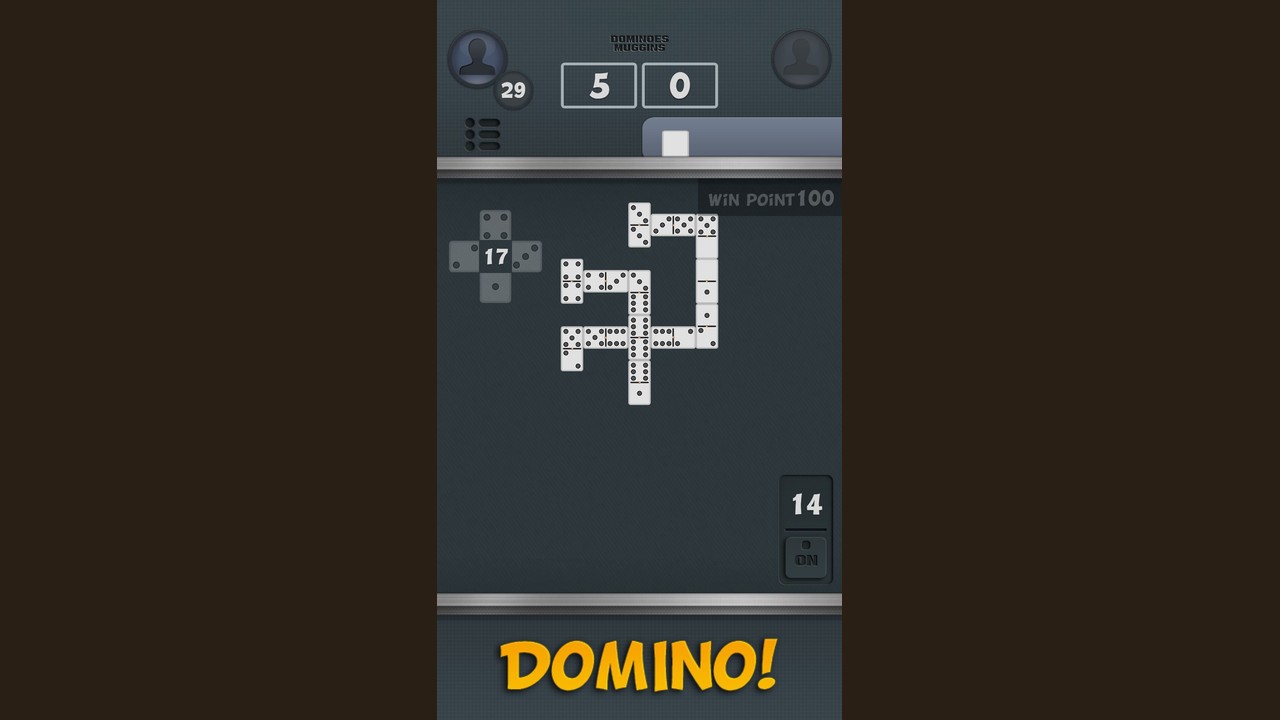
Muggins, widely called All Fives, is the flagship point-scoring variant for players coming to DR Dominoes. You still play by matching ends on a 28-tile double-six set, but after a legal play you add the open ends. If that sum is divisible by 5, the player who just played scores that many points immediately. Master this mode first—see Getting Started—then branch into All Threes or Fives and Threes. For deeper math on arms and leftovers, use Scoring and Spinners.
Core scoring rule
- Play a tile legally onto an open end (or start the hand per table rules).
- Identify every open end on the layout after your play.
- Add those end values.
- If the total is a multiple of 5 (5, 10, 15, 20, …), you score that total now.
- If not, you score nothing for the play itself (end-of-hand scoring may still apply later).
“Open ends” means the numbers currently available for the next player to match—not every face showing in the middle of the chain. When a spinner is in play, more than two arms can be open; count each open arm’s exposed number.
Why the mode feels different from block Dominoes
In pure block Dominoes, success is mostly about emptying your hand and stranding opponents. In All Fives, mid-hand scoring dominates. A player can trail in tiles yet lead on points by repeatedly creating multiples of five. Conversely, going out still matters because remaining pips often convert into end-of-hand points for the winner or against the holders—confirm the app’s end-of-hand line, then study examples in Scoring and Spinners.
Spinners in All Fives
Many All Fives tables treat the first double played as a spinner. Play can branch off the spinner’s sides, creating extra open arms. Each open arm contributes its exposed number to the running total. That is why a board can suddenly jump from “quiet” to a 15 or 20 score after one double-centered play. If DR Dominoes highlights a spinner tile, treat every unfinished arm as live. Miscounting arms is the most common way beginners “lose” points they actually earned—or think they scored when they did not.
Doubles themselves often count as a single open number when they are an open end (the face value once, not twice), but implementations and teaching diagrams sometimes confuse new players. When unsure mid-game, recount carefully; when studying, use the dedicated Scoring and Spinners page for worked counting patterns.
Worked examples (All Fives)
Example A — simple line. Open ends show 6 and 4. Sum = 10. The player who just created that 6-and-4 position scores 10.
Example B — non-scoring play. Open ends show 6 and 3. Sum = 9. Not divisible by 5 → 0 for the play, even if the tile was “strong.”
Example C — blank awareness. Open ends show 5 and 0. Sum = 5 → score 5. Blanks are not “nothing” for matching—they are zero for addition, which can be exactly what you need.
Example D — denying a gift. Open ends are 5 and 5 (sum 10) for your opponent’s turn if they can play. If you can legally change one 5 into a 2, the new sum might become 7—no score for them next. Denial is strategy; legality still comes from How to Play.
Example E — chasing 15. Opens show 6, 4, and 5 across three arms after spinner growth. Sum = 15 → 15 points. Big multi-arm scores are why spinner control matters.
Replay these on an offline board until the arithmetic is instant. Online timers in Online Multiplayer do not wait for pencil math.
Hand goals and pace
Typical private goals in All Fives:
- Create scoring multiples on your turns
- Avoid leaving obvious multiples for opponents
- Preserve flexible tiles (especially versatile mid numbers) for later control
- Watch doubles: they change topology and scoring surface area
- Count high remaining pips so end-of-hand surprises hurt less
Target scores for a full match vary by house and app settings (for example, play to 100 or another threshold). Focus first on maximizing honest scoring chances per hand, not on memorizing every possible race total.
Links to adjacent rules
- Still shaky on matching ends or the boneyard? Return to How to Play Dominoes.
- Need All Threes instead? See All Threes.
- Want 3-or-5 combined scoring? See Fives and Threes.
- Ready to think ahead? Read Strategy and skim the Tier List Hub for ranked tile habits.
- Playing on a phone? Confirm taps with Controls.
Practical DR Dominoes notes
DR Dominoes by SUD Inc. / Studio UpDown presents these variants inside a free, ad-supported Android and iOS client. Mode names in menus may say Muggins, All Fives, or a close label—the divisible-by-five open-end idea is what you are looking for. Android builds have been more recently updated (including 1.28, July 2025); iOS may lag. If a scoring highlight on screen disagrees with your mental math, pause and recount arms before assuming a cheat—UI and spinner counting mistakes are common—then use the practical advice in Online Multiplayer if a pattern of impossible plays appears.
Study routine
- Play one offline hand scoring only multiples of 5; ignore fancy strategy.
- Play one hand focused only on not feeding the opponent a multiple of 5.
- Play one hand where you narrate spinner arms after every double.
- Only then add counting and denial from the Strategy guide.
All Fives rewards clear eyes more than lucky draws. If you can glance at a three-arm board and know whether it totals 10, 12, or 15, you are already ahead of most casual opponents in the queue.
Frequently Asked Questions
Quick answers to the most common questions.
When do you score in Muggins / All Fives?
After your play, if the sum of open ends is divisible by 5, you score that sum immediately.
Do blanks count in the open-end total?
Yes—as zero. A 5 and a blank total 5 and score; blanks still must be matched to play onto them.
What is a spinner in All Fives?
Often the first double played; it can open extra arms. Each open arm’s exposed number counts toward the scoring sum.
Is All Fives the best mode to learn first in DR Dominoes?
Yes. Learn divisible-by-five open ends first, then try All Threes or Fives and Threes.
Where do I learn end-of-hand pip math?
See Scoring and Spinners, then compare with the in-app results screen for your selected mode.