
DR Dominoes All Threes Scoring Variant
Same Dominoes table—open ends score on multiples of three.
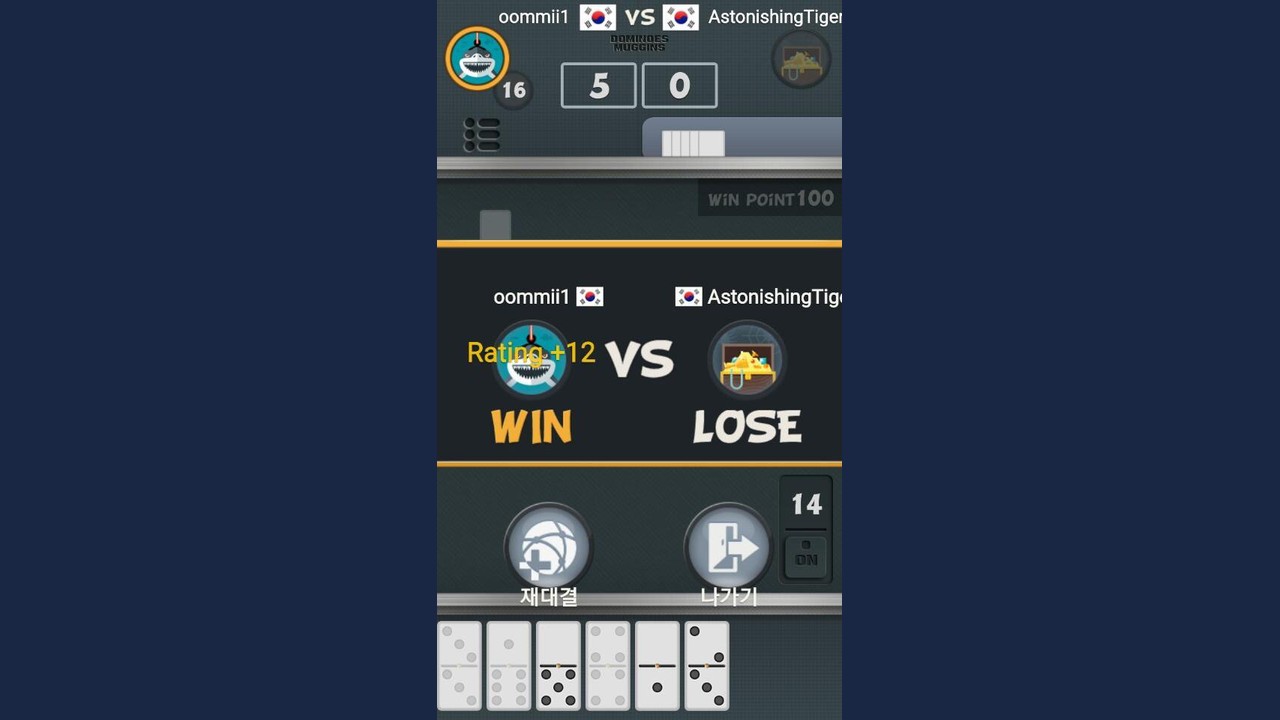
All Threes keeps the familiar Dominoes matching rules used throughout DR Dominoes, but changes the scoring trigger: after you play, add the open ends. If the sum is divisible by 3, you score that total. If you already understand Muggins / All Fives, All Threes is the same mental model with a different modulus. If you are brand new, skim How to Play Dominoes first, then return here.
Why play All Threes?
All Fives trains you to hunt 5, 10, 15, and 20. All Threes trains a denser scoring landscape: 3, 6, 9, 12, 15, 18, and so on appear more often because multiples of three show up frequently on small double-six boards. That means:
- More mid-hand scoring opportunities
- More ways to accidentally gift points
- Slightly different “safe” end combinations
- Greater value on precise counting every single turn
Players who only memorize All Fives patterns often mis-score when they switch modes. Treat All Threes as its own discipline for a few offline sessions before you mix variants.
Core rule
- Make a legal play by matching an open end.
- List every open end (including extra spinner arms).
- Sum those exposed numbers.
- If the sum ÷ 3 has no remainder, score the sum.
- Otherwise, score nothing for that play.
End-of-hand pip settlement still matters when someone goes out or the hand blocks. Use Scoring and Spinners for counting doubles, arms, and leftovers; trust the DR Dominoes results screen for the app’s exact settlement line.
Open-end patterns that matter
Because you care about mod 3, learn quick residues:
- Numbers 0, 3, 6 are residue 0 (already multiples of 3 by themselves).
- 1, 4 are residue 1.
- 2, 5 are residue 2.
A two-end board scores when the residues sum to a multiple of 3 (0+0, 1+2, 2+1, 0+0 with blanks/threes/sixes, and so on). Example:
- Opens 6 and 3 → 9 → scores 9.
- Opens 5 and 4 → 9 → scores 9.
- Opens 5 and 5 → 10 → no score (10 mod 3 = 1).
- Opens 2 and 1 → 3 → scores 3.
- Opens 6 and blank (0) → 6 → scores 6.
Compare that with All Fives, where 6+3 is worthless mid-play (9 not divisible by 5) but 5+5 is excellent. The “good looking” board flips when you change modes—this is the whole point of practicing All Threes separately.
Spinners and multi-arm boards
If the table uses a spinner (commonly the first double), count every open arm. Three arms totaling 2+2+2 = 6 scores; 6+5+1 = 12 scores; 6+5+2 = 13 does not. Multi-arm boards punish sloppy addition more than two-end lines do. On mobile, zoom and confirm each arm—see Controls—before you celebrate or despair.
Doubles as open ends still need careful counting. Do not double-count a double’s pips unless your rules reference says so; most teaching for open-end totals counts the exposed open value in the standard way described on Scoring and Spinners. When the app highlights a score, reconcile it with your arm list.
Strategy shifts from All Fives
- Denial targets change. Leaving 5+5 is a disaster in All Fives (10). In All Threes, 5+5 is only 10 (not a multiple of 3)—annoying but not an automatic gift. Leaving 6+3, however, is a free 9 if the opponent can play.
- Blanks remain surgical. A blank can turn a hot board cold or complete a multiple of 3.
- Sixes and threes are “round” numbers. They often help you manufacture scores, but they also help opponents if left exposed carelessly.
- Count the set. Tile counting from Strategy matters more when scoring chances appear constantly; know whether the
[3|6]or key connectors are still out.
Use the Tier List Hub as a ranked companion for which openings and doubles tend to create controllable boards, remembering that tier advice should be filtered through this scoring modulus.
Example hand narrative
You face opens 4 and 2 (sum 6—already a scoring shape if it is your opponent’s creation on their last turn they may have already scored). You play [2|3], replacing the 2 with 3. New opens: 4 and 3 = 7 → not divisible by 3 → you score 0, but you may have broken their next easy setup. Alternatively, if you hold [2|5], playing it makes opens 4 and 5 = 9 → you score 9. Same starting opens, different tiles, opposite outcomes. All Threes rewards reading the result of the play, not just “I matched a 2.”
How All Threes fits DR Dominoes
SUD Inc. / Studio UpDown ships All Threes alongside All Fives and Fives and Threes in the free Android/iOS app (com.ansangha.drdominoes). Pick the mode explicitly; do not assume an online opponent is playing your preferred modulus. Offline practice is ideal: play five All Threes hands where you only verbalize “sum, divisible by 3?” after every move. Then add denial goals. Then go online with clearer eyes—see Online Multiplayer for timers and queue expectations.
Common mistakes
- Scoring as if you were still in All Fives (hunting only multiples of 5).
- Forgetting a spinner arm in the sum.
- Thinking “higher ends are always better”—a lower sum that hits 6 can beat a flashy 10 that scores nothing.
- Switching variants mid-session without resetting your pattern memory.
- Ignoring end-of-hand pips because mid-hand scoring felt frequent enough.
Study path
- Getting Started → install and offline habits.
- How to Play → legality.
- This page → mod-3 scoring.
- Fives and Threes → combined triggers.
- Strategy → counting and denial.
All Threes is not “All Fives but weirder.” It is a high-frequency scoring mode that rewards residue awareness. Once multiples of three feel obvious, combined modes become much easier to handle.
Frequently Asked Questions
Quick answers to the most common questions.
When do you score in All Threes?
After your play, if open ends sum to a multiple of 3 (3, 6, 9, 12, …), you score that sum.
Is All Threes the same as All Fives?
Same matching rules and double-six set; different scoring modulus (3 instead of 5). Good boards in one mode can be worthless in the other.
Do spinners work in All Threes?
If the table uses a spinner, count every open arm in the sum—multi-arm totals still must be divisible by 3 to score.
Should beginners learn All Threes first?
Usually learn All Fives first for the common Muggins pattern, then All Threes so you do not mix moduli.
Where can I practice counting leftovers?
Use Scoring and Spinners for end-of-hand and arm math, then confirm against DR Dominoes’ results screen.